
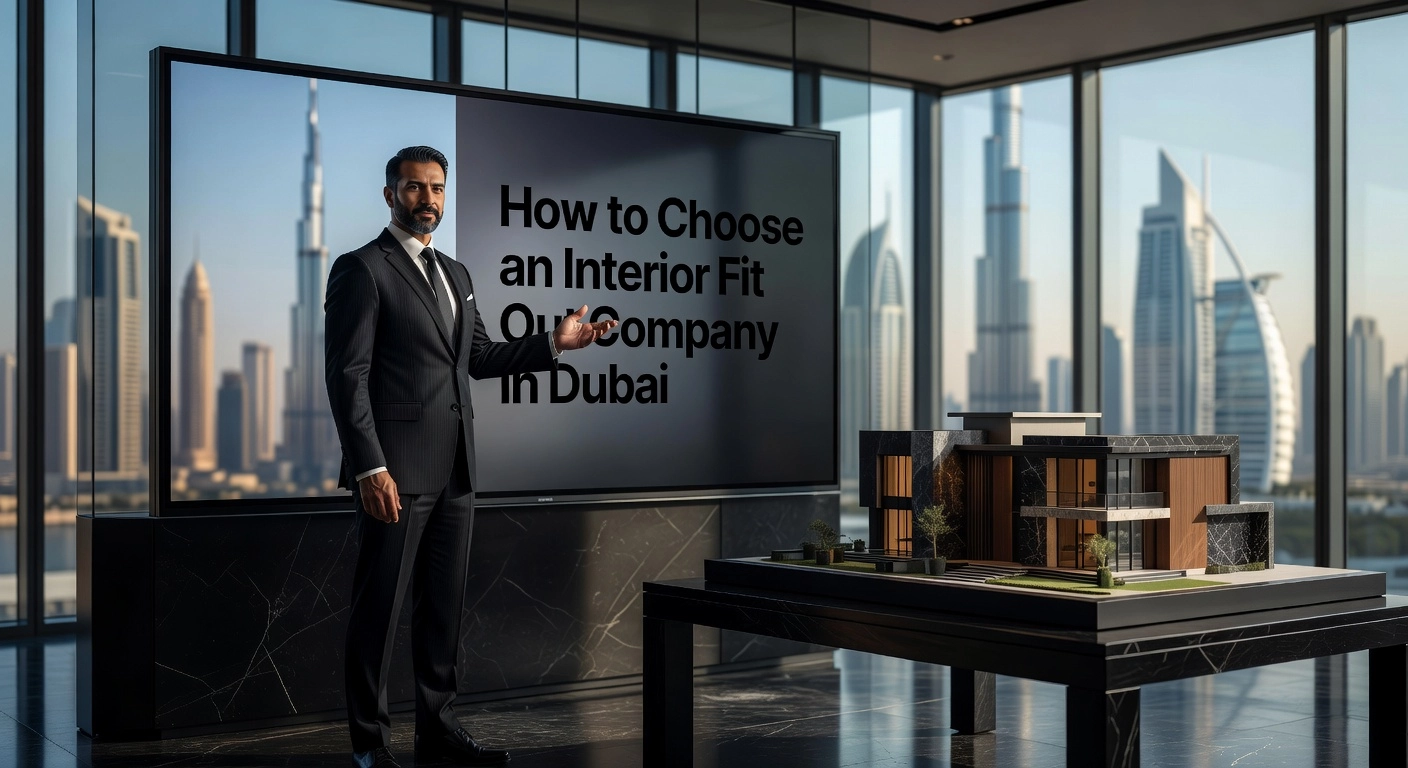
How to Choose an Interior Fit Out Company in Dubai
Your space tells a story before you ever say a word. Whether you are transforming a commercial office, a retail showroom, or a luxury residence, the quality of your fit out determines how that story lands. In a city as competitive and design-forward as Dubai, making the right choice matters more than ever.
Choosing the right interior fit out company in Dubai is not simply about finding someone who can handle the build. It is about partnering with a team that understands your vision, respects your budget, and delivers work that meets the exacting standards this city demands. With hundreds of companies competing for your project, knowing what separates the exceptional from the average can save you significant time, money, and frustration.
This guide breaks down the key factors you need to evaluate before signing any contract. From checking credentials and reviewing past portfolios to understanding project timelines and material quality, you will walk away with a clear, practical framework for making a confident, informed decision. Let us get into what truly matters when selecting your fit out partner in Dubai.
What Interior Fit Out Actually Means in Dubai’s Market
Interior fit-out is the end-to-end process of transforming a raw or existing space into a fully functional, finished environment. It spans everything from initial concept development, space planning, and material specification through to MEP coordination, custom joinery, FF&E installation, and final handover. In Dubai’s market, this work is typically delivered through one of two primary models. Turnkey delivery places a single firm in charge of every stage under one contract, covering authority approvals, trade coordination, procurement, and installation. Design-and-build integrates creative design directly with construction execution, making it the preferred approach for luxury hospitality, branded retail, and corporate headquarters where aesthetic precision and seamless delivery must coexist. Both models minimize coordination risk and accelerate timelines in a market where project delays carry significant financial consequences.
Understanding who you are hiring matters as much as understanding what you need built. A fit-out contractor focuses on technical execution: installing partitions, flooring, ceilings, MEP systems, and joinery based on drawings provided by others. An interior design consultancy operates upstream, producing concepts, mood boards, and specifications without managing construction. An integrated design-and-build firm combines both capabilities under one roof, maintaining unified accountability from concept through to handover. According to research on fit-out versus interior design distinctions, separating these functions frequently leads to coordination gaps, budget overruns, and compliance failures on complex projects.
The stakes in Dubai are considerable. The UAE commercial interior fit-out market was valued at USD 3.08 billion in 2024 and is projected to reach USD 4.43 billion by 2032, growing at a 4.65% CAGR. Dubai alone holds approximately 49% of that activity, driven by office expansions, luxury hospitality upgrades, and retail reconfigurations. This scale means the competitive gap between capable and underprepared firms carries real consequences for project outcomes.
Regulatory complexity reinforces this divide. Most onshore projects require Dubai Municipality approvals, while DEWA coordination governs any electrical or water system modifications. Free zones including DIFC, Trakhees-regulated zones, and DDA jurisdictions each operate distinct approval portals, drawing standards, and NOC requirements. Firms without established regulatory fluency routinely face submission rejections and extended delays that erode budgets and timelines.
Finally, 68.05% of UAE interior design market activity in 2025 consists of renovation and remodeling rather than new builds. This means most fit-out briefs involve upgrading occupied or operational assets, requiring phased delivery, minimal disruption planning, and careful integration with existing building systems. These conditions demand a firm with genuine on-the-ground experience, not just strong portfolio imagery.
8 Capabilities Every Interior Fit Out Company in Dubai Must Have
Choosing the right interior fit out company in Dubai requires more than reviewing a portfolio. The capabilities a firm brings to the table directly determine whether your project is delivered on time, on budget, and to the quality standard Dubai’s market demands. Here are the eight non-negotiable capabilities to evaluate before signing any contract.
1. Turnkey and Concept-to-Handover Delivery
Fragmented project management, where design, procurement, and execution are divided across multiple contractors, routinely inflates costs by 15 to 25 percent through change orders and coordination gaps. Design intent erodes each time responsibility transfers between parties. A genuine turnkey provider owns the full project lifecycle under a single contract, from concept drawings through technical documentation, construction, MEP integration, FF&E installation, and final handover. This unified accountability eliminates the finger-pointing that derails timelines and protects the original design vision throughout execution.
2. In-House MEP Coordination
Subcontracting all mechanical, electrical, and plumbing work creates dangerous blind spots at critical delivery milestones including slab casting, ceiling closures, and commissioning. When MEP trades operate independently, clashes go undetected until costly rework is unavoidable. Firms with in-house or tightly integrated MEP teams maintain real-time coordination, single-point accountability, and seamless integration with finishes and architecture. This capability is especially critical for meeting DEWA infrastructure requirements and Civil Defence approvals on schedule.
3. Joinery and FF&E Procurement Capability
There is a significant operational difference between specifying furniture and actually managing its delivery. Premium custom items carry international lead times of 12 to 20 weeks, require UAE customs clearance, coordinated warehousing, and precise on-site sequencing. An interior fit out company in Dubai without in-house joinery workshop capability or a structured FF&E procurement function cannot reliably control these variables. For hospitality and luxury residential projects, bespoke joinery elements including wall paneling, fitted wardrobes, and custom cabinetry are central to the final experience, making this capability essential rather than optional.
4. BIM and Digital Twin Adoption
Pre-construction Building Information Modeling detects design clashes before a single wall is built, generates accurate quantity take-offs, and produces submission-ready documentation that accelerates Dubai Municipality approvals. According to UAE interior design market data from Mordor Intelligence, BIM adoption is accelerating rapidly across Dubai’s fast-track and complex project environment. Firms using digital twins can test spatial layouts, MEP routing, and material specifications virtually, reducing on-site errors, minimizing waste, and protecting client budgets from costly late-stage changes.
5. Dubai Regulatory Knowledge
Authority submission processes in Dubai vary significantly by jurisdiction. Dubai Municipality, Trakhees for free zones, DMCC, DIFC, and DDA each operate with distinct NOC requirements, submission formats, and inspection protocols. Add DEWA infrastructure coordination and Dubai Civil Defence fire safety approvals into the process, and regulatory navigation becomes a full-time competency. Firms without active registrations and hands-on permitting experience create costly project stoppages. Your fit-out partner should manage the entire approval chain internally.
6. Hospitality and Luxury Sector Portfolio
The premium and luxury tier currently holds 48.72% of the UAE interior design market and is growing at 10.12% CAGR, making hospitality experience a reliable signal of execution standard. Hotels, F&B outlets, and resort environments demand live-environment management, guest-experience sensitivity, and zero-defect delivery under tight timelines. A firm that has delivered five-star hotel interiors understands the coordination complexity and quality threshold required across Dubai’s premium segment. Portfolio depth in hospitality is a proxy for overall delivery capability.
7. Sustainability Credentials Aligned with Dubai 2040
The Dubai 2040 Urban Master Plan creates both regulatory pressure and genuine client demand for measurable green credentials. Practical sustainability capability includes LEED, WELL, or Estidama certification experience, low-VOC material sourcing, energy-efficient MEP specification, and structured reporting that quantifies outcomes. Green retrofit competency is particularly relevant given that renovation and remodeling represented 68.05% of the UAE interior design market in 2025. Firms that can demonstrate sustainability outcomes, rather than simply making claims, position clients for long-term compliance and operational savings.
8. Post-Handover Maintenance and Warranty Programs
High-traffic hospitality environments place significant stress on finishes, joinery, and MEP systems. A structured post-handover program covering preventive maintenance, warranty claims, and minor rectification work ensures that the investment performs as intended over its operational life. The relationship with your interior fit out company in Dubai should not end at practical completion. Firms offering formal after-sales programs demonstrate confidence in their own workmanship and provide the operational continuity that luxury environments require to maintain their standard over time.
Dubai’s Interior Fit Out Market in 2026: What the Numbers Tell You
Understanding the scale and direction of Dubai’s fit-out market gives you a critical advantage before you select a firm or commit to a project brief. The data available for 2026 paints a clear picture of where spending is concentrated, which segments are accelerating, and what design priorities will define quality work in the years ahead.
1. A Market Growing Faster Than Most Expect
The UAE interior design market is projected to reach USD 1.94 billion in 2026, expanding to USD 3.11 billion by 2031 at a 9.83% CAGR, according to Mordor Intelligence’s UAE interior design market analysis. Dubai commands 51.74% of total UAE market activity, making it the single most significant geography for fit-out investment in the region. This dominance is sustained by foreign ownership liberalization, ultra-high-net-worth migration, and the city’s continued positioning as a global business hub. For clients commissioning fit-out work, this level of market activity translates directly into strong competition among firms and rising delivery standards.
2. Hospitality Is the Defining Segment
Hospitality holds approximately 34% of the UAE commercial interior fit-out market, representing the largest single application segment by a significant margin. This figure is backed by a committed hospitality development pipeline exceeding USD 100 billion, encompassing new hotel builds, resort expansions, and large-scale property renovations across the emirate. Tourism growth targets and the sustained inflow of international visitors mean hotel operators are continuously investing in guest experience upgrades. For any interior fit out company in Dubai, hospitality expertise is not a niche specialization; it is a core market requirement.
3. Luxury Is Outpacing the Broader Market
The premium and luxury tier holds 48.72% market share and is growing at a 10.12% CAGR, outpacing the overall market rate. This reflects Dubai’s fundamental positioning as a global luxury destination rather than a mid-market one. Projects in this tier demand bespoke specifications, hand-finished detailing, advanced security integration, and materials sourced to exacting standards. Firms without genuine luxury execution credentials are effectively excluded from nearly half the market.
4. Renovation Generates More Work Than New Builds
Verified Market Research data on the UAE interior design market corroborates Mordor Intelligence findings showing renovation and remodeling at 68.05% of market activity in 2025. Upgrading existing hotels, retail environments, and commercial offices consistently generates more fit-out contracts than new construction. Asset-refresh cycles, ESG retrofit mandates under the Dubai 2040 Urban Master Plan, and shorter project timelines in occupied spaces all drive this dominance. Clients should expect fit-out firms with strong renovation capabilities to carry heavier project pipelines and more relevant execution experience.
5. The Design Philosophy Has Shifted Permanently
WATG’s 2026 interior design trends report documents a clear industry pivot away from visually spectacular but emotionally shallow interiors toward spaces built around emotional resonance, wellness integration, cultural authenticity, and measurable sustainability. Multisensory design elements including acoustics, scent layering, circadian lighting, and biophilic features are now baseline expectations in premium hospitality projects, not added extras.
6. Warm Minimalism Has Replaced Maximalism
Earthy palettes, natural stone, visible craftsmanship, and organic material combinations are now the dominant aesthetic direction in Dubai hospitality and commercial interiors. Sand tones, terracotta, greige, and caramel finishes are appearing across hotel lobbies, F&B environments, and executive office fit-outs. This shift toward quiet luxury rewards firms with genuine material knowledge and in-house joinery capability rather than those relying on trend-driven surface treatments.
7. Smart Technology and Modular Fabrication Are Now Standard
Quiet smart technology integration and modular off-site fabrication have moved from premium differentiators to standard delivery expectations among leading Dubai fit-out firms. BIM coordination, digital twins, and prefabricated modular components reduce on-site errors, compress timelines, and support sustainability targets. Firms still treating these as optional upgrades are falling behind the delivery benchmarks that sophisticated clients now require as a baseline.
Hospitality Fit Out in Dubai: Why This Segment Demands a Higher Standard
Of all the segments an interior fit out company in Dubai can operate in, hospitality stands alone in its complexity, its margin potential, and the unforgiving standards it imposes on every party involved. A hotel lobby that opens two weeks late costs the operator in lost bookings, damaged brand reputation, and penalties embedded in management contracts. A restaurant that launches with acoustic problems or inconsistent lighting quality generates negative reviews before the first week of service concludes. These are not hypothetical risks; they are the operational reality that makes hospitality the most demanding category in the fit-out market.
Why the Standards Are Non-Negotiable
Hotel operators and F&B groups work within brand compliance frameworks that govern everything from finish specifications and furniture dimensions to lighting color temperature and acoustic ratings between guest rooms. International flag operators deploy dedicated quality assurance teams who conduct pre-opening inspections against documented brand standards, and deviations trigger mandatory rectification regardless of cost or schedule impact. This zero-tolerance environment means a fit-out partner must demonstrate precision across procurement, installation, and commissioning, not just construction speed. Guest experience outcomes are directly tied to physical execution quality; even minor post-handover defects such as perceptible sound transfer between rooms, uneven lighting across dining zones, or surface wear on high-touch materials generate immediate complaints that translate into measurable drops in review scores and average daily rate.
What Operators Actually Require from a Fit-Out Partner
Hotel operators and F&B groups require capabilities that go well beyond standard project delivery. Phased execution around live operations is a baseline expectation for renovation projects, where construction activity must be sequenced to protect occupied floors, maintain guest access routes, and contain dust and noise within defined hours. Hotel fit-out specialists in the UAE understand that this level of site management demands experienced supervisors, not just competent contractors. FF&E coordination adds another layer of complexity; international brand procurement teams often specify furniture, fixtures, and equipment from approved global suppliers with lead times of 16 to 24 weeks, requiring a fit-out partner who can integrate international logistics into the construction programme without creating critical path delays. Acoustics and layered lighting systems are technical deliverables that require specialist design input, not site-level improvisation.
The Pipeline Reality and What It Means for Your Project
The UAE’s committed hospitality development pipeline exceeds USD 100 billion, and in Q1 2026 the broader Middle East hotel construction pipeline reached a record 717 projects totalling over 177,000 rooms, with the UAE contributing 105 active projects. This volume creates two compounding pressures: contractor capacity tightens as skilled teams, specialist subcontractors, and quality materials become allocated across multiple simultaneous projects, and the firms with proven hospitality track records become selectively engaged well ahead of tender. Securing an experienced partner at the briefing and design stage, rather than at tender, is increasingly the approach taken by sophisticated developers and operators who cannot afford programme risk in a market this competitive.
Integrated Design Capability as a Differentiator
This is where firms with a genuine architectural and interior design background, such as NAR, deliver outcomes that pure contracting firms cannot replicate. Design trends in the hospitality industry consistently show that the gap between design intent and physical execution is where projects lose their value. NAR’s integrated approach, spanning concept, documentation, FF&E specification, and fit-out delivery, preserves design fidelity through every phase. When the same team that developed the spatial narrative is also overseeing material procurement and installation quality, change orders reduce, brand storytelling remains intact, and the final environment reflects the original vision rather than a value-engineered approximation of it.
Multisensory Design as a Fit-Out Deliverable
The 2026 hospitality design agenda has shifted decisively toward multisensory experience. Acoustics, scent design, tactile material quality, and lighting layering are now evaluated as fit-out deliverables requiring design intelligence rather than standard construction execution. Circadian lighting systems that adjust throughout the day, signature scent integration through HVAC infrastructure, and the specification of natural materials selected for their tactile warmth and acoustic absorption properties all require a team that understands human-centric design principles alongside construction methodology. Hotels adopting this approach report measurably higher guest satisfaction scores and increased willingness to pay.
Cultural Storytelling as a Commercial Differentiator
Dubai’s hotel and resort clients are increasingly demanding interiors that reflect regional identity rather than generic global luxury aesthetics. Hyper-localization, using local stone varieties, hand-crafted Arabic geometric patterns, Emirati textile references, and vernacular architectural elements drawn from Gulf heritage, creates a sense of place that resonates with culturally conscious travellers. This direction also supports sustainability objectives by reducing reliance on imported materials and engaging local artisans. For hotel and resort operators competing in a market approaching 200,000 rooms, an interior that tells an authentic regional story is a meaningful differentiator, and delivering it requires a design and fit-out partner with both cultural literacy and technical execution capability.
How to Evaluate Interior Fit Out Proposals in Dubai
Selecting a fit-out partner based on a proposal alone carries significant risk unless you know precisely what to look for. A structured evaluation framework protects your investment and separates firms with genuine execution capability from those with impressive presentations but unreliable delivery.
What a Credible Proposal Must Include
A strong fit-out proposal is a technical document, not a brochure. It should open with a clear project methodology covering trades coordination, MEP integration, QA/QC processes, and site logistics. Beyond methodology, look for a detailed authority submission plan that names the specific approvals required, whether Dubai Municipality, Civil Defence, DEWA, or developer NOCs, along with realistic timelines and the party responsible for each submission. Subcontractor disclosure is equally important; a credible contractor names key subcontractors, provides evidence of their qualifications, and explains the oversight structure. The proposal should include a milestone schedule with a critical path, float allowances, and phasing detail. Payment terms should be milestone-based and tied to verified deliverables, not front-loaded. Warranty terms should specify a defects liability period of at least 12 months, response SLAs for aftercare, and named project team members including the site supervisor. According to guidance on selecting fit-out contractors in Dubai, proposals that omit itemised BOQs with unit rates, clear inclusions and exclusions, and named staff are consistently associated with execution problems downstream.
Red Flags That Signal Execution Risk
Certain omissions in a proposal are not minor oversights; they are indicators of structural risk. Vague timelines without critical-path analysis suggest the contractor has not properly planned the project. Full subcontracting of core trades such as MEP and joinery, with no disclosure of the main contractor’s oversight role, transfers accountability to parties you have not evaluated. The absence of BIM or digital pre-construction processes is a particular concern on complex hospitality and commercial projects, where clash detection and coordination drawings prevent costly on-site errors. A proposal with no named site management staff signals that day-to-day oversight has not been committed to your project. As comparative analysis of fit-out quotes highlights, significantly underpriced submissions, vague scope descriptions, pressure to sign quickly, and missing defects liability clauses all warrant immediate scrutiny before any contract is executed.
Questions to Ask at Tender Stage
The briefing and tender process is your primary opportunity to probe capability beyond documentation. Ask directly who manages the site on a daily basis and what the project manager-to-supervisor ratio is across active projects. Request a specific explanation of how scope variations are handled, including the pricing mechanism, approval timeline, and documentation process. Ask for the contractor’s Dubai Municipality and Civil Defence submission track record, including average approval timelines and any recent rejection history. Request delivery performance references that speak specifically to on-time handover, budget adherence, and defects management rather than design aesthetics alone. These questions reliably distinguish contractors with repeatable delivery systems from those whose strength is limited to early-stage presentation.
Understanding Cost per Sqm and Portfolio Quality
Cost benchmarks provide an important reality check during evaluation. Premium villa fit-out in Dubai starts at AED 9,000 per sqm, with luxury-specification projects reaching AED 11,000 per sqm or above. Commercial Grade A fit-outs in Dubai average approximately USD 3,499 per sqm, while hospitality projects for five-star or complex F&B environments typically exceed these figures due to custom joinery, stringent regulatory requirements, and imported materials. Cost variation between proposals often reflects differences in material origin, sustainability specifications, and project complexity rather than contractor efficiency. Always compare proposals against an itemised BOQ rather than a headline figure.
Portfolio assessment should extend beyond aesthetics entirely. Review the square meterage delivered per sector, project duration relative to scope, and whether client references address execution metrics or only design outcomes. A contractor who has delivered 50,000 sqm of hospitality fit-out across multiple renovation cycles with consistent on-time performance represents a fundamentally different level of reliability than one with visually striking photography but no verifiable delivery data.
Post-Handover Maintenance as a Reliability Indicator
For hospitality clients managing assets across multiple renovation cycles, post-handover maintenance agreements are among the most revealing indicators of long-term partner reliability. A contractor confident in their workmanship will commit to structured aftercare with defined SLAs, spare parts provisions, and ongoing support documentation. These agreements reduce operational risk, extend asset life, and eliminate the cost and disruption of sourcing separate maintenance contractors after handover. When evaluating proposals, treat the presence and quality of a post-handover maintenance framework as direct evidence of whether the firm views your project as a transaction or as the foundation of an ongoing partnership.
Why Nujum Alrabie Approaches Interior Fit Out Differently in Dubai
Most interior fit-out projects in Dubai encounter the same structural problem: the firm that designed the space is not the firm building it. This separation creates a predictable chain of compromises, where contractors interpret drawings differently, material substitutions go unchallenged, and the original design intent erodes incrementally before handover. Nujum Alrabie resolves this at the structural level by integrating architecture, interior design, and fit-out execution within a single accountable team. The result is a delivery model where the professionals who conceived the spatial logic, selected the materials, and calibrated the lighting are the same professionals overseeing every stage of physical execution. That continuity is not incidental; it is the foundation of how NAR protects quality from concept through to completion.
A Single Team Across the Full Delivery Lifecycle
NAR’s concept-to-handover model covers every stage that typically fragments across multiple firms: design development, authority approvals, fit-out execution, FF&E procurement, specialist installations, and post-handover maintenance. Clients engage one team, receive one point of accountability, and avoid the coordination overhead that compounds costs and delays when consultancy and contracting responsibilities sit with separate organisations. The process moves from open client communication and spatial concept development through sketch, preliminary, final, and technical design phases, into full realization managed by NAR’s project managers alongside contractors, suppliers, and specialist partners in sustainability, acoustics, and lighting. According to the NAR team’s approach, this integrated structure is intentional, designed to eliminate the communication gaps that routinely cause budget overruns and diluted outcomes in Dubai’s competitive fit-out environment.
Global Intelligence, Local Execution
NAR’s multicultural professional team brings worldwide project experience into a Dubai-specific operational context. This combination matters because international design intelligence without local regulatory knowledge produces projects that are visually ambitious but practically delayed. NAR’s team understands Dubai’s authority approval processes, market supply chains, and the precise standards that hospitality and commercial clients must meet. The firm’s worldwide collaboration network extends its capability without sacrificing the local accountability that fast-moving Dubai projects demand.
Hospitality Specialisation as a Fit-Out Advantage
NAR’s deep focus on hospitality projects shapes how the firm approaches fit-out execution at a fundamental level. Understanding brand standards, operational phasing requirements, and the sensory precision demanded by luxury hotel and F&B environments means NAR plans installations around guest experience outcomes, not just construction sequences. Durable material selection, workflow efficiency, and immersive detail work are treated as execution priorities, not afterthoughts.
Sustainability Aligned with Dubai 2040
NAR’s design philosophy reflects the regulatory and commercial realities of Dubai’s 2040 Urban Master Plan, which mandates minimum Al Sa’fat Bronze-tier ratings for new projects and renovations and drives demand for low-VOC materials, local sourcing, biophilic design, and energy-efficient systems. For clients, this means NAR delivers both compliance support and a genuine commitment to responsible material use, protecting long-term asset value as sustainability credentials become an increasingly weighted factor in hospitality and commercial real estate decisions.
Frequently Asked Questions About Interior Fit Out in Dubai
How long does a typical interior fit-out project take in Dubai?
Timeline depends heavily on project type, scale, and regulatory complexity. F&B fit-outs, including restaurants and cafés, typically run 8 to 16 weeks from design finalization through handover, partly because health and safety approvals add a distinct layer to the process. Hotel room renovations are managed in phases to protect operational continuity, with each phase commonly requiring 12 to 24 weeks. Commercial office fit-outs generally fall within the 10 to 20 week range for standard to premium-grade spaces. Factors that compress timelines include integrated firms with in-house MEP and joinery capabilities, pre-approved documentation packages, and established authority relationships, which can shave 2 to 4 weeks off the approval stage alone. Factors that extend schedules include imported material sourcing delays, late client decisions, change orders, and multi-authority submissions for free-zone projects.
What does interior fit-out cost per sqm in Dubai?
Premium residential fit-outs, including luxury villas and apartments, benchmark at AED 9,000 and above per sqm for high-specification finishes. Hospitality projects carry a higher range, typically AED 10,000 to AED 19,000-plus per sqm, with five-star hotel interiors regularly exceeding AED 17,000 per sqm due to custom FF&E, bespoke joinery, and guest-experience engineering. Commercial office fit-outs span AED 2,000 to AED 7,000 per sqm depending on grade and specification. Cost variation is driven by four primary factors: specification level and material quality, material sourcing origin (imported stone, timber, and metals carry supply chain risk), MEP complexity including HVAC upgrades and smart systems integration, and authority approval requirements tied to green building compliance. Treat these figures as planning benchmarks; final costs require a detailed scope assessment.
Do fit-out companies handle Dubai Municipality approvals and regulatory submissions?
Full-service firms manage the complete submission process across Dubai Municipality, Dubai Civil Defense, DEWA, and relevant free-zone authorities such as Trakhees or the Dubai Development Authority. Clients typically retain responsibility for the initial No Objection Certificate from the property owner or building manager, and for providing existing as-built drawings and tenancy documentation. Firms with established authority relationships and a track record of compliant package submissions routinely achieve approvals in 2 to 4 weeks, compared to significantly longer timelines for teams without that infrastructure. Always verify a contractor’s specific licensing and approval history relevant to your project’s jurisdiction before appointment.
What is the practical difference between a fit-out contractor and an interior design firm, and which does a hospitality client need?
An interior design firm delivers the conceptual output: space planning, material specifications, mood boards, and construction drawings. A fit-out contractor handles physical execution: procurement, construction, MEP installation, joinery fabrication, and project handover. Hospitality clients require both functions operating under a single point of accountability. The integrated design-and-build model eliminates coordination gaps between designer intent and contractor execution, accelerates procurement and approvals, enables early value engineering, and ensures brand standards are translated precisely onto-site. Separate firms working in sequence consistently introduce delay and dispute risks that hospitality timelines cannot absorb.
How do I write a brief for a hospitality fit-out project in Dubai?
A strong brief includes five core components. First, project scope should define exact areas, square footage, phasing constraints, and any operational limitations such as night-works-only requirements. Second, brand standards documentation should cover style guides, mood boards, FF&E specifications, and guest experience objectives. Third, phasing constraints should outline guest disruption tolerances and sectional handover requirements. Fourth, budget parameters should state the overall range, contingency allocation, and prioritization between durability and luxury. Fifth, timeline requirements should specify target dates, key milestones, and event-driven deadlines. Include existing as-built drawings and site photos with the brief to enable accurate proposals from shortlisted firms.
What sustainability certifications should I ask a Dubai fit-out company to demonstrate?
Request demonstrated competence with Dubai Green Building Regulations, which are mandatory across many project categories and cover energy, water, and materials performance. Ask for alignment with the Dubai 2040 Urban Master Plan, which prioritizes resource efficiency and long-term livability across the emirate’s built environment. International frameworks including LEED and WELL certification are increasingly relevant for hospitality and commercial clients seeking measurable credentials. Practical sustainability reporting should include energy and water savings projections, low-VOC and certified material sourcing documentation, construction waste diversion rates, and post-occupancy performance data. These credentials support UAE Net Zero 2050 commitments and are becoming a competitive differentiator in procurement decisions across Dubai’s fit-out market.
Choosing the Right Fit Out Partner in Dubai: Key Takeaways
Dubai’s USD 3.08 billion commercial fit-out market does not reward the lowest tender price or the most visually impressive portfolio presentation. It rewards clients who evaluate partners on verified capability, and that distinction consistently separates successful project outcomes from costly delays and scope failures.
The eight non-negotiable capabilities covered in this guide form a practical evaluation framework: turnkey concept-to-handover delivery, in-house MEP, joinery and FF&E competency, BIM-led process, regulatory knowledge, hospitality experience, sustainability credentials, and post-handover support. A firm that cannot demonstrate all eight introduces measurable risk into your project timeline and budget.
Hospitality and luxury tier projects, which account for approximately 34% of the UAE commercial fit-out market and are growing faster than any other segment, require a design-led partner. A pure construction contractor cannot navigate the guest experience requirements, brand standards, and sensory detail that hospitality fit-out demands.
Nujum Alrabie brings architectural vision and fit-out execution together under one practice, serving hospitality, commercial, and residential clients across Dubai and internationally. The next step is straightforward: contact NAR to discuss your project scope, objectives, and timeline. This is a conversation about your brief, not a sales process.
Conclusion
Choosing the right interior fit out company in Dubai comes down to a few non-negotiables: verified credentials and experience, a portfolio that reflects genuine quality, transparent timelines, and a team that communicates clearly from day one.
Do not rush this decision. The company you choose will shape every detail of your space, from the materials underfoot to the finishing touches that guests notice first. Take time to compare, ask hard questions, and trust your instincts when something feels off.
Your space is an investment in your brand, your comfort, and your future. When you partner with the right team, that investment pays off in ways that last for years.
Start your search today with these criteria in hand, and you will be far better positioned to find a fit out partner who truly delivers.
0 comments