
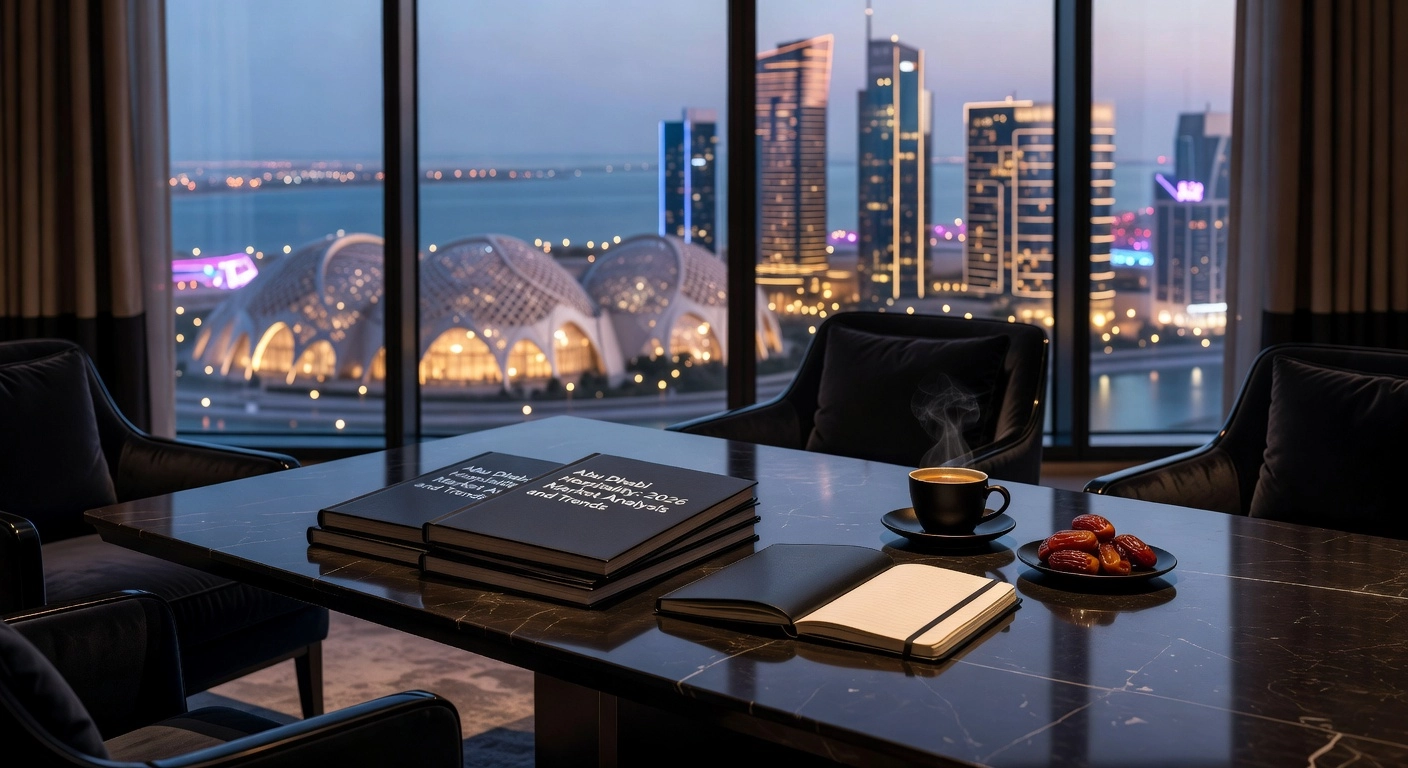
Abu Dhabi Hospitality: 2026 Market Analysis and Trends
As Abu Dhabi cements its position as a global powerhouse in tourism and business, the hospitality sector pulses with unprecedented momentum. Record-breaking visitor numbers, mega-events like the 2025 World Expo’s lingering impact, and billions in infrastructure investments signal a market poised for explosive growth. Yet, beneath this optimism lies a complex landscape of evolving consumer demands, sustainability pressures, and technological disruptions that demand sharp analysis.
This comprehensive 2026 market analysis of Abu Dhabi hospitality unpacks the forces shaping the industry’s trajectory. We examine key trends, from the surge in luxury eco-resorts and AI-driven guest experiences to the rise of wellness retreats catering to affluent millennials and Gen Z travelers. Drawing on proprietary data, expert forecasts, and regulatory insights, readers will gain actionable intelligence on revenue projections, occupancy rates, and competitive dynamics.
Whether you are a hotelier, investor, or industry strategist, this report equips you with the foresight to navigate opportunities and mitigate risks. Discover how Abu Dhabi hospitality is not just adapting, but redefining global standards through 2026 and beyond.
Abu Dhabi Hospitality Market Overview
Abu Dhabi has emerged as a premier hospitality destination, strategically complementing Dubai’s high-volume, urban appeal with its focus on ultra-luxury, culture-infused experiences. While Dubai thrives on mega-resorts and nightlife, Abu Dhabi’s Abu Dhabi hospitality sector emphasizes serene beachfront escapes and cultural immersion, particularly on Saadiyat Island. This cultural hub hosts elite properties like The St. Regis Saadiyat Island Resort, Park Hyatt Abu Dhabi Hotel and Villas, and Rixos Premium Saadiyat Island, blending Emirati heritage with modern opulence. Attractions such as the Louvre Abu Dhabi, which drew 1.4 million visitors in 2025, and the newly opened Natural History Museum drive longer stays, averaging 2.9 nights, up 3% year-over-year. This positioning attracts high-value guests seeking authentic wellness and experiential luxury amid events like Formula 1 at Yas Marina. For developers and designers, this underscores opportunities in sustainable, culturally integrated interiors that elevate guest satisfaction.
Government initiatives propel this growth, aligning with the UAE Tourism Vision 2031, which targets 40 million annual hotel guests nationwide to diversify non-oil GDP. Visa reforms, including Golden Visas for investors and remote workers, plus the forthcoming 2026 single GCC tourist visa, boosted international arrivals by 10% in 2025, led by India at 22%. Infrastructure like Etihad Rail’s passenger network, launching in 2026 with 11 stations, will connect Abu Dhabi to Dubai in under 50 minutes, spurring inter-emirate travel and MICE demand. In 2025, Abu Dhabi recorded 26.6 million visitors, 5.9 million hotel guests (up 2.2%), and AED 9.1 billion in revenues (up 19.5%), with occupancy at 81% and RevPAR surging 23% year-to-date. Details on these cultural and tourism achievements are available here. MICE activity exploded with 6,600 events and 2.2 million delegates, up 37-40%, fueled by ADNEC expansions.
Key players like Aldar Hospitality and Modon Properties lead branded expansions. Aldar is investing AED 1.5 billion in luxury transformations, including IHG’s Vignette Collection on Yas Island (over 1,000 keys) and Waldorf Astoria Eastern Mangroves. Modon Hospitality advances lifestyle projects like Olympia Resort on Hudayriyat Island, opening 2026, with wellness and MICE integration. These efforts capitalize on Abu Dhabi’s 37,016 hotel keys as of 2025, second only to Dubai, with 2,300 added last year and a pipeline exceeding 50,000 by 2030. Occupancy hit record highs of 79.3% through August 2025 and over 85% in January 2026, with RevPAR up 24% and ADR 20.2%. Amid global events and trends like sustainability and AI personalization, Abu Dhabi hospitality is poised for 10-20% annual growth. Explore tourism strategies here. This robust market signals prime opportunities for expert interior design firms to deliver innovative, durable solutions.
Key Growth Statistics for 2026
Abu Dhabi’s hospitality sector enters 2026 with unprecedented momentum, underscored by exceptional performance metrics that signal sustained expansion and investor confidence. Building on a transformative 2025, where total visitors reached 26.6 million and hotel revenues climbed 19.5% year-over-year to Dh9.1 billion, the emirate’s hotels demonstrated resilience through high occupancy and revenue growth. This foundation positions Abu Dhabi as a profitability leader within the UAE, driven by strategic diversification into MICE events, cultural tourism, and luxury stays. For stakeholders in architectural and interior design, such as firms specializing in hospitality projects, these statistics highlight opportunities in new developments amid 37,016 hotel keys operational as of 2025. Analysts project continued strength, with supply growth moderating to support premium pricing and experiential offerings.
Record Occupancy Rates
Abu Dhabi hotels set benchmarks with a record-high occupancy of 79.3% in August 2025, the strongest August on record according to the Department of Culture and Tourism (DCT) Abu Dhabi, fueled by a 10% year-over-year increase in summer hotel guests to 2.04 million from May to August (DCT Annual Report 2025). This peak reflected robust demand from leisure travelers and early event spillovers. Fast-forward to January 2026, occupancy surpassed 85%, averaging 85.2% with nightly rates above 80% and peaks at 95.5% during the World Future Energy Summit and World Technology Conference, as reported by Travel and Tour World. These figures, the strongest January in over a decade, illustrate event-driven reliability and a shift toward year-round appeal. Actionable insight: Hospitality developers should prioritize flexible spaces for MICE integration to capitalize on such peaks, ensuring interiors support high-turnover adaptability.
Revenue Metrics
Revenue performance reinforced Abu Dhabi’s edge, with RevPAR surging 24% year-over-year through August 2025 and ADR rising 20.2%, per Knight Frank’s UAE Hospitality Market Review (Knight Frank UAE Hospitality Review 2025). Full-year 2025 ADR averaged AED 591, up 19%. In January 2026, ADR jumped 10.4% to AED 846, with RevPAR at AED 721, up 9.9%. CoStar projects 4.4% RevPAR growth for 2026, aligned with 4.2% Middle East forecasts, bolstered by 11% more inbound seats and visa reforms. These trends offer design firms clear directives: Emphasize sustainable, tech-enabled interiors to justify premium rates and sustain long-term profitability.
Visitor and Market Statistics
Visitor numbers hit 5.9 million hotel guests in 2025, up 2.2% year-over-year per TTN Worldwide (TTN Worldwide Report), with average stays extending to 2.9 nights and international arrivals from India rising 22%. The broader UAE hospitality market reaches USD 30.07 billion in 2026, growing at 7.87% CAGR to USD 43.92 billion by 2031, per Mordor Intelligence.
Leadership Against UAE-Wide Targets
Abu Dhabi’s metrics outpace UAE averages, leading profitability with 24% RevPAR growth versus national 11.9%. This aligns with UAE Tourism Strategy 2031’s 40 million annual hotel guests goal, where Abu Dhabi excels in quality metrics like 81% average occupancy. Investors note its maturity phase, narrowing gaps with high-volume peers through culture-led resorts and rail connectivity, positioning it for investment pivots in 2026.
Emerging Trends Shaping Abu Dhabi Hospitality
Luxury and Personalization
Abu Dhabi hospitality is redefining luxury through subtle sophistication, known as quiet luxury, which emphasizes privacy, exclusivity, and refined experiences over flashy displays. This trend aligns with a surge in demand from US travelers, where Abu Dhabi topped global searches for luxury stays in 2026, marking a 421% increase according to Connecting Travel. Wellness programs are central, featuring longevity spas and senior-friendly retreats that cater to high-spending guests averaging 3.42-night stays. Cultural immersion elevates this further, with Saadiyat Island resorts integrating art and history via the Guggenheim Abu Dhabi, opened in 2025, and the upcoming Zayed National Museum. For operators, actionable insights include adopting bespoke personalization, such as AI-curated itineraries blending wellness with cultural tours, to boost guest loyalty and RevPAR. This positions Abu Dhabi as a serene counterpoint to busier destinations, driving sustained growth.
Sustainability Initiatives
Sustainability forms the backbone of Abu Dhabi hospitality’s future, propelled by the Hospitality Advisory Council’s 2026 priorities under the UAE Ministry of Economy and Tourism, as outlined here. Post-COP28, initiatives target zero-waste operations, green building certifications like Green Key, and eco-resorts in areas such as Al Dhafra and Eastern Mangroves. Hotels are eliminating single-use plastics ahead of the 2026 UAE ban, implementing in-house water bottling, composting, and recycling to cut hospitality waste. With 79.3% occupancy through August 2025 and projections for resilience, these practices enhance profitability while supporting UAE Tourism Strategy 2031’s 40 million annual hotel guests target. Property developers should prioritize OECD-aligned policies for supply-demand balance, investing in energy-efficient designs to meet mandates and appeal to eco-conscious travelers. This not only reduces environmental impact but also differentiates premium offerings.
Technology Integration
Technology is revolutionizing Abu Dhabi hospitality through AI-driven personalization and seamless digital tools, fueled by UAE policy reforms aiming for 50% government AI services by 2028. ChatGPT-powered virtual concierges provide predictive dining and wellness recommendations, while in-room robots handle deliveries and check-ins, as piloted in GCC properties. Digital bookings via apps promote direct reservations and dynamic pricing, aligning with Hospitality Advisory Council goals for revenue optimization. Events like Ai Everything Abu Dhabi in October 2026 will showcase robotics, enhancing operational efficiency amid visa easing and Etihad Rail connectivity. For stakeholders, integrating multilingual chatbots and data analytics can elevate guest satisfaction, targeting the 85%+ January 2026 occupancy. These advancements ensure hyper-personalized stays, positioning the sector for long-term competitiveness.
Culinary Excellence and Attractions
Culinary prowess is amplifying experiential stays, with the Time Out Abu Dhabi Restaurant Awards 2026 and World’s 50 Best Restaurants Awards drawing global acclaim. Supported by the Department of Culture and Tourism, these spotlight Michelin Guide hotels like Fairmont Bab Al Bahr, fusing Emirati flavors with international innovation. Mega-projects such as Saadiyat Grove Phase 2, Yas Island waterfronts, and Reem Mall upgrades integrate premium dining zones, boosting 2025’s 5.9 million hotel guests and 19.5% revenue rise. Operators can leverage this by curating food-led itineraries, enhancing multi-sensory appeal.
Convergence with Dubai
Abu Dhabi hospitality is converging with Dubai, narrowing RevPAR gaps through stable metrics like +24% YoY growth to August 2025 and 4.4% projected for 2026. Intra-UAE travel surges, with Dubai-Abu Dhabi combos favored by Europeans and GCC families via improved connectivity. This multi-destination model, backed by family guidelines, fosters ecosystem synergy for prolonged stays.
Interior Design’s Role in Hospitality Success
In Abu Dhabi’s thriving hospitality landscape, where hotel occupancy hit a record 79.3% in August 2025 and revenues surged 19.5% year-on-year with 5.9 million guests, interior design emerges as a critical driver of competitive advantage. Bespoke interiors elevate luxury resorts and hotels by weaving cultural authenticity into every detail, such as intricate mashrabiya patterns, desert-hued palettes, and artisanal Emirati motifs that resonate with guests seeking immersive experiences. This approach aligns seamlessly with 2026 personalization trends, where 78% of UAE hoteliers prioritize voice-enabled customization, fostering emotional connections through tactile elements like stitched leathers and site-specific art. Properties on Saadiyat Island exemplify this, blending opulent native woods with geometric designs to boost repeat visits and RevPAR growth of 24% year-to-date. For operators, investing in such tailored spaces not only differentiates amid 37,016 hotel keys but also enhances guest satisfaction scores by creating intimate, story-driven environments.
Sustainable Materials and Designs for Eco-Resorts
Sustainability is non-negotiable in Abu Dhabi’s eco-resorts, governed by the Estidama Pearl Rating System mandating at least 1 Pearl for new builds. Designers leverage reclaimed woods, bamboo, recycled metals, and low-emission finishes to achieve compliance while slashing operational costs by 15-30% through durable, climate-resilient applications. Biophilic integrations like green walls and natural ventilation improve indoor environmental quality, aligning with post-COP28 priorities and appealing to wellness-focused travelers. These choices ensure longevity in high-humidity conditions, reducing maintenance needs and supporting the UAE’s 40 million annual hotel guest target by 2031. Actionable insight: Prioritize repairable frameworks and modular elements for adaptability in evolving green standards.
Tech-Ready Spaces for Modern Guest Experiences
Forward-thinking interiors incorporate smart lighting with circadian-adjusting LEDs and AI-integrated furnishings that learn preferences via biometrics, enabling keyless entry and predictive climate control. In Abu Dhabi’s extreme heat exceeding 50°C, these systems pre-cool rooms and optimize energy use, cutting bills by 25-30% while delivering seamless, app-driven personalization. Occupancy sensors in lobbies and suites support high-traffic flows at 85%+ rates seen in early 2026, with AR navigation enhancing navigation. This “muted tech” approach preserves aesthetic elegance, positioning hotels for direct bookings and elevated reviews.
Expert fit-out and renovation services excel in high-occupancy venues, employing premium materials like fire-rated upholstery and natural marble for enduring performance under heavy use. Phased renovations minimize disruptions, integrating MEP systems for RevPAR uplift projected at 4.4% in 2026. Comprehensive turnkey solutions from Nujum Alrabie span concept ideation, approvals, sourcing, execution, and handover, ensuring flawless delivery in booming Saadiyat and Yas developments. See Abu Dhabi’s visitor surge and revenue boom fueling demand for such expertise. This holistic model guarantees ROI, transforming visions into operational successes.
Future Opportunities for Stakeholders
Abu Dhabi’s hospitality sector stands at the cusp of transformative expansion, particularly in MICE, branded hotels, and entertainment zones, propelled by the UAE’s ambitious target of 40 million annual hotel guests by 2031. MICE activity surged in 2025 with 2.2 million delegates across 6,600 events, a 40% increase, supported by world-class venues like Yas Marina Circuit and emerging tech-enabled facilities. Branded hotel pipelines, including luxury additions on Saadiyat Island and Yas Island, will add to the existing 37,016 keys, capitalizing on 5.9 million hotel guests in 2025 (up 2.2% year-on-year). Entertainment districts, such as the forthcoming Sphere Abu Dhabi with its immersive 20,000-capacity venue, promise year-round draws, aligning with Tourism Strategy 2030’s goals for diversified visitation. Stakeholders should prioritize investments here to capture rising international demand, projected to drive double-digit RevPAR growth.
Leveraging Renovation Trends for Sustained RevPAR
To maintain high RevPAR, which grew 24% year-on-year through August 2025 and is forecast at +4.4% for 2026, operators must embrace sustainable upgrades and technology retrofits. Sustainability mandates, including Net Zero 2050 initiatives, favor energy-efficient HVAC systems and eco-materials like recycled metals, potentially slashing hotel energy use by 20-30% while earning LEED certifications that attract premium guests. Tech integrations, such as IoT sensors for real-time optimization and AI personalization, enhance operational efficiency and guest experiences amid 85%+ occupancy peaks, like January 2026’s 85.2% rate. Actionable steps include phased retrofits during off-peaks, yielding 10-15% cost savings and bolstering ADR growth of 20.2% seen in 2025. These upgrades not only comply with post-COP28 green policies but position properties for long-term competitiveness. For details on performance, see STR’s January 2026 analysis.
Strategic Partnerships and Property Manager Implications
Partnering with specialized design firms like Nujum Alrabie (NAR), which offers all-in-one architectural, interior design, maintenance, fit-out, and warranty services tailored for hospitality, streamlines operations and minimizes disruptions. NAR’s 20+ years of UAE expertise ensures high-quality workmanship, transparent pricing, and same-day responses, ideal for renovations under high-occupancy pressures. Property managers, managing assets at 79.3% average occupancy in 2025, benefit from fast-response teams that deliver durable solutions, from plumbing to full-scale tech retrofits, enabling capitalization on 85%+ rates without revenue loss. These collaborations provide warranties for peace of mind, fostering customer satisfaction through clean, professional execution.
Policy support via Abu Dhabi Tourism Strategy 2030 and global events like F1 and ADIPEC project sustained 5-6% CAGR growth, cementing Abu Dhabi’s leadership through infrastructure and visa reforms. This trajectory demands proactive stakeholder action to unlock enduring value.
Key Takeaways and Action Steps
Abu Dhabi’s hospitality sector demonstrates robust growth, with hotel occupancy reaching a record 79.3% in August 2025 and surpassing 85% by January 2026, alongside 24% year-on-year RevPAR surges and 20.2% ADR increases. These metrics, fueled by 5.9 million guests in 2025, position Abu Dhabi as a trend leader in luxury, sustainability, and tech integration, targeting 40 million UAE-wide visitors by 2031 within a USD 30 billion market expanding at 7.87% CAGR. Abu Dhabi leads UAE hospitality growth.
Property owners should audit interiors for sustainable, tech-enhanced designs like AI personalization and eco-materials to align with 2031 goals. Consult UAE firms with 20+ years of proven expertise in Dubai’s maintenance, renovations, and fit-outs; they offer transparent pricing, warranties, and all-in-one services from skilled technicians.
Action Steps:
- Assess property needs for luxury hospitality upgrades.
- Review portfolios showcasing cultural, high-end projects.
- Secure detailed quotes for renovations ensuring durability.
Proactive investments yield a competitive edge in this dynamic market.
Conclusion
In summary, Abu Dhabi’s hospitality sector stands on the brink of explosive growth, fueled by record visitor numbers, mega-events, and massive infrastructure investments. Key trends highlight the rise of luxury eco-resorts, AI-enhanced guest experiences, and wellness retreats tailored to affluent millennials and Gen Z. Revenue projections and occupancy forecasts reveal robust opportunities amid sustainability and tech-driven shifts.
This analysis equips hoteliers, investors, and industry leaders with proprietary data and expert insights to navigate competitive dynamics confidently.
Seize the moment: download our full 2026 report today or contact our team for personalized strategy sessions. Position your business at the forefront of Abu Dhabi’s global hospitality renaissance, and turn these trends into tangible success. The future is bright; act now to lead it.
0 comments