
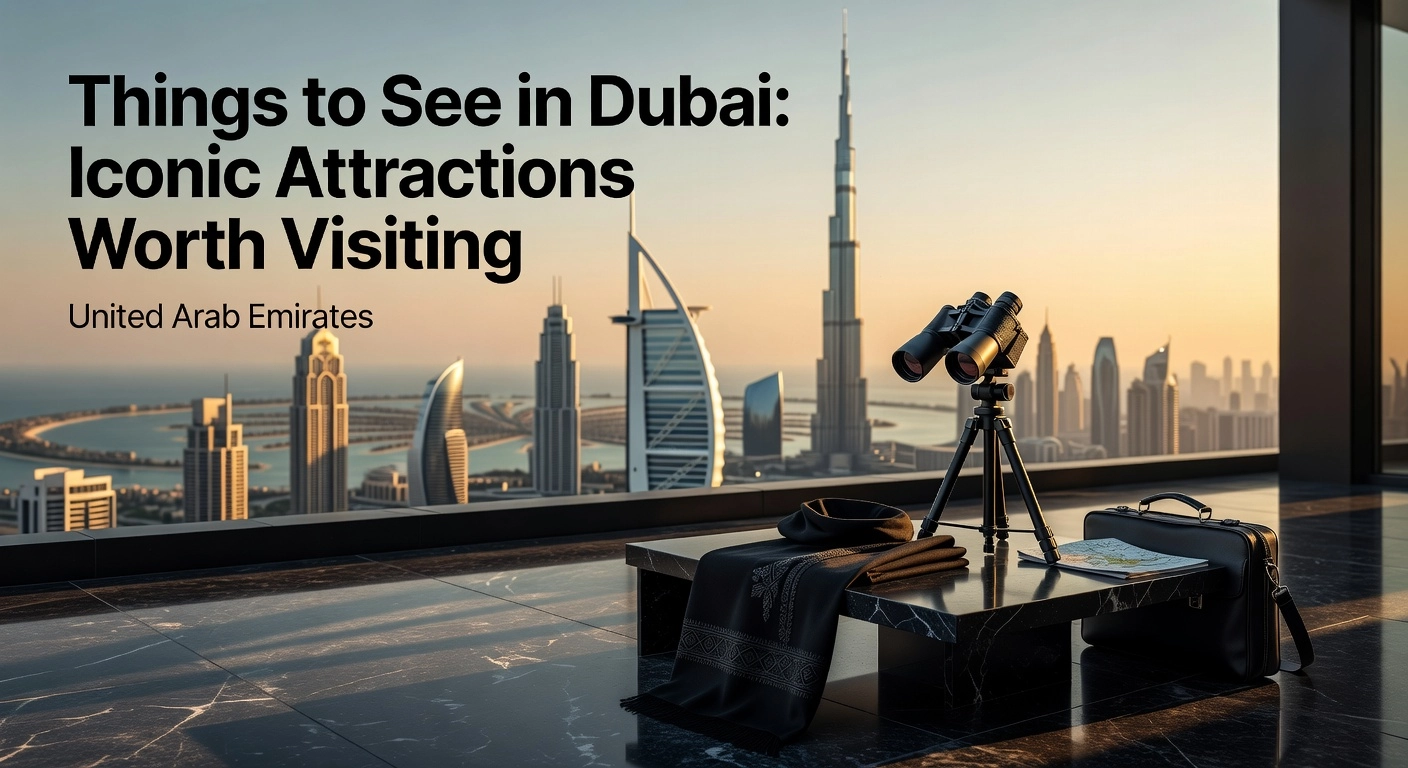
Things to See in Dubai: Iconic Attractions Worth Visiting
Dubai is one of those rare destinations that consistently exceeds expectations. From record-breaking skyscrapers to ancient gold souks, this glittering city in the United Arab Emirates offers something truly unforgettable at every turn. Whether you are planning your first visit or simply dreaming about it from afar, knowing the best things to see in Dubai will help you make the most of every moment you spend there.
This city has transformed itself from a quiet fishing village into a global powerhouse of architecture, culture, and entertainment in just a few decades. That rapid evolution means visitors are treated to a fascinating blend of tradition and innovation unlike anywhere else on Earth.
In this guide, we have carefully curated a list of the most iconic attractions Dubai has to offer. You will discover world-famous landmarks, hidden cultural gems, and thrilling experiences suitable for all types of travelers. By the time you finish reading, you will have a clear and confident plan for exploring this extraordinary city with ease.
Iconic Architectural Landmarks That Define Dubai’s Skyline
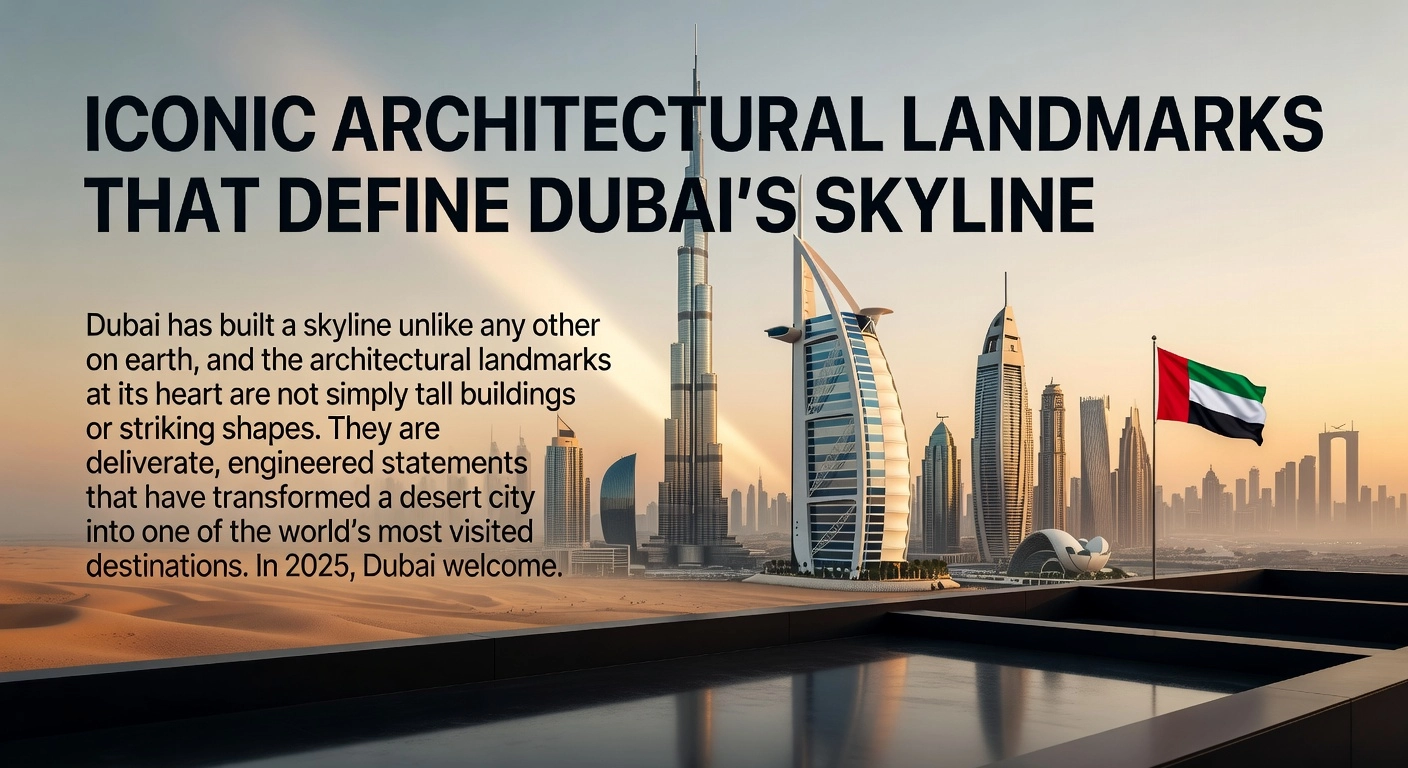
Dubai has built a skyline unlike any other on earth, and the architectural landmarks at its heart are not simply tall buildings or striking shapes. They are deliberate, engineered statements that have transformed a desert city into one of the world’s most visited destinations. In 2025, Dubai welcomed 19.59 million international overnight visitors, marking the third consecutive record-breaking year and a 5% increase over the previous year. That kind of sustained growth does not happen by accident. It is driven, in large part, by landmarks so visually commanding and experientially rich that they become reasons to travel in themselves.
1. Burj Khalifa
Standing at 828 metres, the Burj Khalifa is the world’s tallest structure and the undisputed centrepiece of Dubai’s skyline. For first-time visitors, it is genuinely difficult to comprehend its scale until you are standing at its base looking upward. The observation decks on floors 124 and 148 are where the architectural ambition becomes a fully designed visitor experience. These platforms are not simply lookout points. They incorporate glass floors, multi-level spatial transitions, and immersive lounges that create a sense of theatre as much as altitude. The deliberate sequencing of these spaces, from ground-level arrival through to the sky-high viewing gallery, demonstrates exactly how architectural intent shapes the emotional value of tourism. Booking in advance is strongly recommended, as timed entry slots sell out regularly.
2. Burj Al Arab
The Burj Al Arab has been a symbol of ultra-luxury hospitality design since it opened in 1999, and its sail-shaped silhouette remains one of the most recognised architectural forms in the world. The design draws directly from Dubai’s seafaring heritage, referencing the form of a traditional dhow sail. Inside, the interiors set a benchmark for culturally fused opulence that few properties have matched since. Gold leaf detailing, Statuario marble, Arabesque motifs, and bespoke decorative elements come together in spaces that feel simultaneously rooted in regional identity and aspirationally global. Even if you are not staying as a guest, afternoon tea or a restaurant reservation provides access to interiors worth experiencing firsthand.
3. Museum of the Future
Opened in 2022, the Museum of the Future has rapidly earned its place among Dubai’s most important architectural achievements. Its torus-shaped facade is covered in Arabic calligraphy, rendered across more than 14,000 metres of stainless-steel panels featuring over 1,000 unique three-dimensional forms. The building itself is a work of parametric engineering that challenges conventional ideas of what a public institution should look like. Inside, immersive experiential galleries replace traditional static displays with interactive explorations of sustainability, innovation, and human potential. For visitors new to Dubai, this is the landmark that most clearly signals where the city is heading culturally and intellectually.
4. Dubai Frame
The Dubai Frame offers something the other landmarks on this list cannot: perspective. This 150-metre steel-and-glass structure, positioned in Zabeel Park, frames historic Deira on one side and the gleaming towers of the modern city on the other. A glass-floored sky walkway connects the two towers at the top, creating a visceral physical experience of standing between two entirely different versions of the same city. Interactive displays and augmented reality features inside document Dubai’s transformation from a modest fishing settlement into a global metropolis. For any visitor trying to understand how Dubai became what it is today, the Frame provides both the literal and figurative vantage point to do exactly that.
Leisure, Retail and Urban Experiences Along the Waterfront
Dubai’s waterfront districts bring together retail, entertainment, and urban design at a scale that consistently surprises first-time visitors. These zones are not simply places to shop or relax; they are carefully layered environments where architecture, public space, and hospitality intersect to create experiences that are difficult to find anywhere else in the world.
1. Dubai Mall: The World’s Largest Shopping and Entertainment Complex
Dubai Mall is the world’s largest shopping mall by total area, covering approximately 1,124,000 square metres across its sprawling Downtown Dubai footprint. With over 1,200 retail outlets, more than 200 dining options, and an annual footfall exceeding 80 million visitors, it functions as far more than a retail destination. Inside, you will find an Olympic-sized indoor ice rink, the Dubai Aquarium and Underwater Zoo featuring the world’s largest acrylic viewing panel, and a direct promenade leading to Burj Lake. A $408 million expansion currently underway will add 240 luxury stores, reinforcing its position as the commercial anchor of Downtown Dubai. For first-time visitors, it is worth dedicating an entire day here rather than treating it as a passing stop.
2. The Dubai Fountain: Public Space as Performance Art
Positioned on Burj Lake directly outside Dubai Mall, the Dubai Fountain is the world’s largest choreographed fountain system. Water jets reach heights of up to 150 metres, accompanied by 6,600 lights, 25 coloured projectors, and a curated music programme that shifts nightly. Evening performances run every 30 minutes from 6:00 p.m. to 11:00 p.m., with each show lasting between three and five minutes. What makes this attraction particularly compelling is how it transforms a public waterfront into a performance venue, drawing enormous crowds who gather along the promenade without any admission fee. Following a significant renovation completed in late 2025, the fountain’s lighting and sound systems have been upgraded, making the evening experience more vivid than ever before.
3. Dubai Marina and JBR Beachfront: Walkable Urban Lifestyle
Dubai Marina and the adjacent Jumeirah Beach Residence (JBR) beachfront together form one of the city’s most walkable and liveable coastal corridors. High-rise residential towers, boutique hotels, beach clubs, fitness trails, and open-air dining create a layered environment where leisure and urban life overlap naturally. Visitors can walk from the marina promenade to the beach in minutes, passing retail outlets and waterfront restaurants along the way. The design of this district reflects a broader shift in hospitality thinking, where the quality of outdoor public space is considered as carefully as the interior of any individual venue.
4. Palm Jumeirah: Engineering Ambition at Resort Scale
Palm Jumeirah remains one of the most recognisable land reclamation achievements in modern history. The artificial archipelago is home to Atlantis The Palm and the Aquaventure Waterpark, which holds a Guinness World Record for the most water slides in a single waterpark, with over 105 individual slides and attractions. Signature rides such as the Leap of Faith drop guests through a near-vertical slide into a shark-filled lagoon, making it a genuine thrill destination for families and adventure seekers alike. The entire island exemplifies how resort-scale development can transform a coastline into a self-contained lifestyle destination.
5. Ain Dubai: Record-Setting Leisure Infrastructure
Ain Dubai on Bluewaters Island stands 250 metres tall, making it the world’s largest observation wheel, surpassing the Las Vegas High Roller by 82 metres. Its 48 climate-controlled cabins each accommodate up to 10 guests, and a full rotation takes approximately 38 minutes. The views across the Marina skyline, Palm Jumeirah, and the open Gulf provide a spatial perspective on Dubai’s urban growth that no ground-level experience can replicate. Beyond its record-breaking dimensions, Ain Dubai demonstrates how leisure infrastructure at this scale can anchor an entirely new mixed-use island development, setting a benchmark for destination planning globally.
Culture and Heritage: Dubai Beyond the Skyscrapers
Dubai’s appeal extends far beyond its record-breaking towers and engineered waterfronts. For first-time visitors, the city’s heritage quarter offers something equally compelling: a direct encounter with the culture, architecture, and trading traditions that existed long before the oil era transformed everything.
1. Al Fahidi Historical District: Architecture Frozen in Time
The Al Fahidi Historical Neighbourhood is one of the most architecturally significant areas in the entire Gulf region. Built using stone, gypsum, teak, and palm fronds, its distinctive wind-tower structures, known locally as barjeel, were designed to channel cool air into buildings without mechanical assistance. Walking through its narrow pedestrian lanes, you encounter buildings that date as far back as the 1780s, all carefully preserved against the backdrop of a city that routinely demolishes and rebuilds at speed. The contrast with Dubai’s hypermodern exterior is not incidental; it is profound, and it gives visitors genuine architectural context that no skyscraper observation deck can provide.
2. Dubai Creek: A Living-History Crossing
Dubai Creek is the waterway that made this city possible. Centuries before the towers appeared, traders relied on this natural inlet to move goods between settlements on either bank. Today, that crossing is still available to anyone willing to pay AED 1 for a seat on a traditional wooden abra boat. Around 150 abras operate across two main routes between Deira and Bur Dubai, each carrying approximately 20 passengers. The short ride delivers views of heritage buildings alongside modern developments, creating an experience of layered time that no curated attraction can replicate. It is also a practical starting point for exploring the souks on either side of the water.
3. Gold Souk and Spice Souk: Sensory Richness Without a Script
Located in Deira, just steps from the Creek’s abra stations, the Gold Souk and Spice Souk remain among the most intact traditional market environments in the Gulf. The Gold Souk’s hundreds of shops display intricate jewellery at a density that is immediately overwhelming in the best possible sense. The adjacent Spice Souk layers that experience with aromas of saffron, frankincense, and dried rose petals. No shopping mall replicates this quality of sensory engagement, because the experience here is unscripted, unbranded, and entirely human in scale.
4. Dubai Museum: One Generation, Total Transformation
Housed inside Al Fahidi Fort, which was constructed between 1787 and 1799, the Dubai Museum documents one of the most compressed urban transformations in recorded history. Exhibits have long illustrated the shift from a modest fishing and pearling settlement to a global metropolis, all within a single generation. The museum is currently undergoing major restoration ahead of a 2026 reopening, with updated facilities and exhibits expected to strengthen its position as a cultural anchor for the district.
5. Why Cultural Contrast Is Now Central to the Dubai Experience
Dubai welcomed a record 19.59 million international overnight visitors in 2025, and a growing portion of that number arrived specifically seeking authentic cultural encounters alongside the city’s engineered spectacles. Heritage tourism globally is expanding at approximately 4.5 to 5.4 percent annually, and Dubai’s heritage quarter is well positioned to capture that interest. Travellers who spend time in Al Fahidi, cross the Creek by abra, and browse the souks in Deira consistently describe these experiences as the most memorable of their visit, not because they compete with the skyscrapers, but because they explain everything that came before them.
Adventure and Nature Experiences Outside the City
Beyond Dubai’s towers and waterfronts lies a completely different world, one that rewards visitors who venture beyond the main tourist corridor. The natural landscapes surrounding the city offer experiences that feel genuinely remote, even though they are accessible within a short drive.
Desert Safaris and the Dubai Desert Conservation Reserve
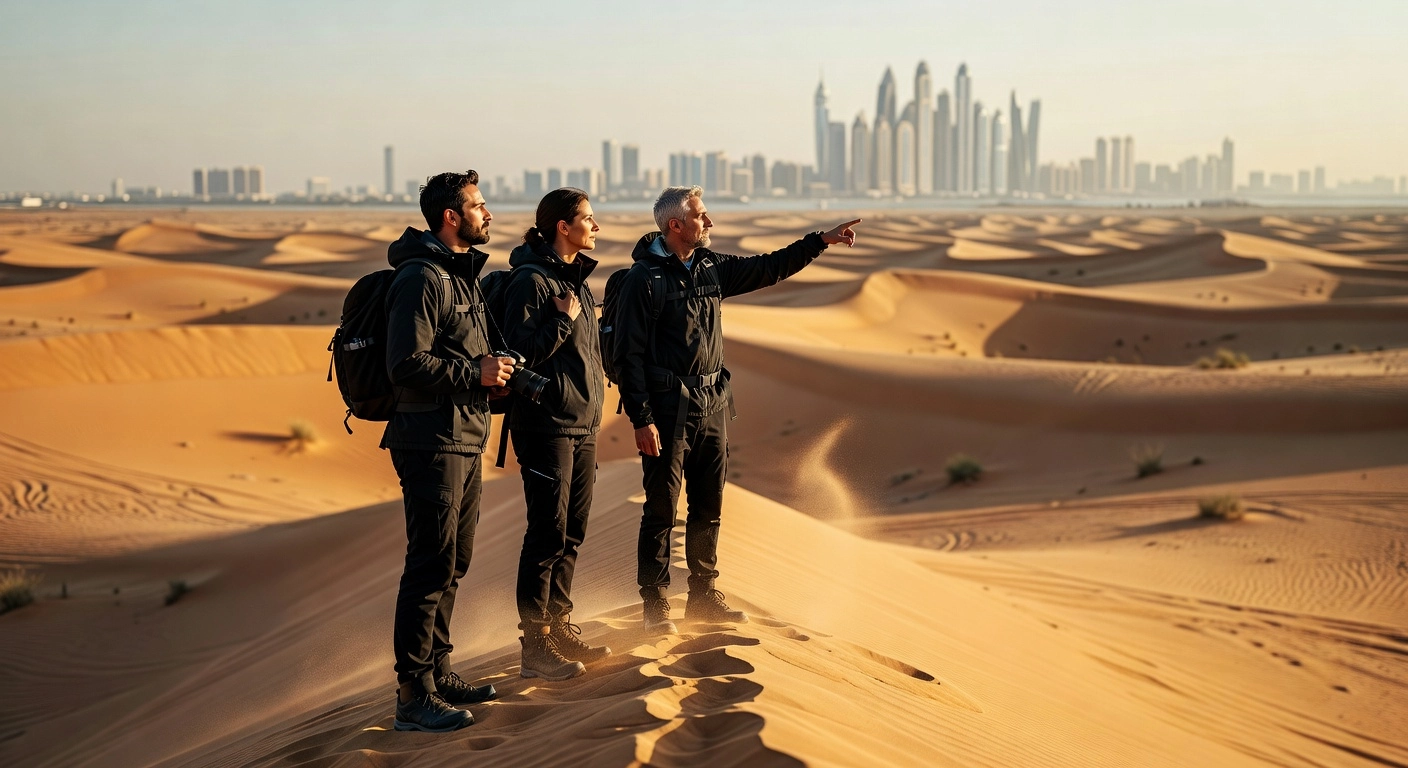
The Dubai Desert Conservation Reserve is the starting point for most desert adventure experiences, and it delivers far more than a simple thrill ride. Covering 225 square kilometres of protected hyper-arid habitat in southeastern Dubai, it represents approximately five percent of the emirate’s total land area and holds the distinction of being the UAE’s first national park. Visitors can join guided safaris that include dune bashing in 4×4 vehicles, camel trekking across golden dunes, sandboarding, and overnight camping under remarkably clear desert skies. What makes the reserve particularly special is its wildlife. Arabian oryx, reintroduced after wild extinction in the 1970s, now roam the reserve alongside Arabian gazelles, red foxes, and an impressive variety of desert birds. This makes the DDCR one of very few places on the planet where visitors can observe these animals in a setting that closely resembles true wilderness.
Sunset Experiences and Bedouin Hospitality
Sunset desert safaris consistently rank among the highest-rated activities in Dubai on major travel platforms, with premium operators regularly achieving ratings above 4.8 out of 5 from thousands of international reviews. The format combines the physical excitement of dune driving with the quieter reward of golden-hour landscape photography, where the shifting light transforms the dunes into scenes of extraordinary visual depth. Evenings conclude at traditional Bedouin-style camps, where guests experience camel rides, henna painting, live music, and generous hospitality dinners. For first-time visitors, this combination of adventure, culture, and natural scenery within a single outing represents exceptional value.
Hatta Mountain Reserve: A Quieter Alternative
Located roughly 1.5 hours east of central Dubai, the Hatta region offers a striking contrast to both the desert and the urban core. Rugged mountains, clear wadis, and cooler temperatures create ideal conditions for hiking, mountain biking, and kayaking on the Hatta Dam reservoir. Visitors seeking a calmer, more restorative outdoor experience consistently favour Hatta over the busier main attractions.
This growing appetite for nature-connected travel is not incidental. International visitor data and 2026 hospitality design research both point to a significant shift toward wellness-led, biophilic environments. Leading designers across the Middle East are responding by integrating natural light, organic materials, and climate-responsive features into new hospitality spaces, recognising that the demand for nature is reshaping where and how people choose to stay.
New and Emerging Attractions to See in Dubai in 2026
Dubai is not resting on its record-breaking achievements. Even after welcoming 19.59 million international overnight visitors in 2025, its third consecutive record year, the city continues to open boldly designed, experience-first attractions that compete for space on every visitor’s itinerary.
The View at The Palm
Sitting 240 metres above Palm Jumeirah on the 52nd floor of The Palm Tower, The View at The Palm delivers a genuine 360-degree panorama across the Arabian Gulf, the man-made island below, and the full Dubai skyline. Standard admission begins at around 110 AED, with premium tiers adding dining, VIP guided tours, and special occasion packages. What sets this observation experience apart from earlier generations of viewpoints is its deliberate design for social media engagement. Interactive exhibits about Palm Jumeirah’s construction history, photogenic outdoor terraces, and curated sightlines make the visit as shareable as it is spectacular. For first-time visitors building an itinerary around iconic views, this is one of the most distinctive stops available.
LEGOLAND Dubai and Motiongate at Dubai Parks and Resorts
Dubai Parks and Resorts represents the clearest evidence of the city’s deliberate push beyond luxury and thrill-seeking markets. LEGOLAND Dubai caters specifically to children aged 2 to 12 with LEGO-themed rides, live shows, and hands-on building zones. Motiongate brings DreamWorks, Lionsgate, and Columbia Pictures franchises to life through immersive themed environments and high-energy attractions. Recent additions to the wider complex include Real Madrid World, the world’s first football-themed park, alongside Neon Galaxy and GLITCH, a large-scale interactive arcade. Together, these attractions signal that Dubai is actively courting multi-generational travellers who may not be drawn by ultra-luxury or desert adventure alone.
House of Hype
Located inside Dubai Mall at Fountain Views on Level 1, House of Hype is a high-energy pop-culture experience built across 25 interactive worlds. Visitors move through neon cities, hidden rooms, playful challenges, and surprise dining encounters, with no two visits identical. Having welcomed over 500,000 visitors and holding a 4.8 rating, it appeals strongly to younger travellers, content creators, and repeat visitors looking for design-forward entertainment that rewards exploration.
Why Design Quality Now Decides the Competition
With the average visitor stay sitting at just 3.7 nights in 2025, every attraction in Dubai competes for a limited number of hours on a finite itinerary. This pressure has produced a measurable shift toward family-friendly and wellness-oriented offerings that deliver depth and repeatability alongside spectacle. Dubai’s 2025 to 2026 pipeline, which includes AYA Universe, Pac-Man Live Experience, and expanded Expo City programming, reflects a city that understands visitor expectations are evolving. Immersive design, experiential storytelling, and social shareability are no longer differentiators; they are baseline requirements for any attraction entering this market.
The Design Force Behind Dubai’s Tourism Dominance
Dubai’s hotel occupancy rate of 80.7% in 2025, spread across 827 hotels and more than 154,000 rooms, is one of the most telling statistics in global tourism. That figure does not happen by chance. It is the direct result of decades of sustained investment in architectural quality and interior design excellence that transforms accommodation into genuine, memorable experience. When visitors choose to return to Dubai, and many do, they are responding to environments that were purposefully designed to exceed expectations at every touchpoint. The spatial quality of Dubai’s hospitality offerings is a competitive asset as much as any marketing campaign.
The financial weight behind this design commitment is substantial. The GCC interior design market is projected to reach approximately USD 14.79 billion in 2026, fuelled by continued hospitality expansion across the region and rising visitor expectations. International travellers arriving in Dubai now bring benchmarks shaped by world-class hotels, cultural institutions, and leisure destinations from across the globe. Dubai meets and frequently surpasses those benchmarks because its developers and operators treat design as a core strategic investment, not a finishing detail applied after construction.
The trends shaping Dubai’s newest hospitality openings in 2026 reflect a sophisticated understanding of what today’s visitors actually want. Immersive experiential interiors move beyond visual appeal to engage all the senses, using acoustics, lighting, scent, and spatial storytelling to create emotional resonance. Sustainability and biophilic integration have shifted from optional features to expected standards, with living walls, natural materials, and circadian lighting now appearing across the city’s premium properties. Smart technology operates seamlessly in the background, supporting frictionless check-in, personalised room controls, and connected services that remove friction from the guest journey. Most distinctively, culturally fused luxury draws on authentic UAE heritage, desert tones, traditional craftsmanship, and regional motifs, without reducing them to superficial decoration. The result is a “spirit of place” that visitors cannot find anywhere else in the world.
Firms operating at the intersection of architecture and hospitality interior design play a measurable role in producing these outcomes. Nujum Alrabie (NAR), a UAE-based architectural and interior design practice working across global hospitality projects, represents exactly the kind of specialised expertise that turns ambitious briefs into completed spaces that drive occupancy, satisfaction, and loyalty. Their work, delivered by a skilled team of professionals from concept through to handover, contributes directly to the quality standard that keeps Dubai performing ahead of competing destinations.
Every attraction covered throughout this guide owes a portion of its appeal to deliberate design decisions made long before the first visitor arrived. Recognising that connection gives hospitality investors and developers a clearer framework for approaching new projects in Dubai with confidence, understanding that great design is not a cost, it is the foundation of long-term commercial performance.
Practical Information for Planning Your Dubai Visit
Planning your Dubai visit with the right information makes the difference between a good trip and a seamless one. Here is everything a first-time visitor needs to know before arrival.
When to Go
The best time to visit Dubai is between October and April, when daytime temperatures sit comfortably between 20 and 30 degrees Celsius, making outdoor sightseeing genuinely enjoyable. This cooler window is peak season, and the numbers reflect that clearly. December 2025 marked a historic milestone, with over 2 million international visitors arriving in a single month for the first time ever. Hotel occupancy climbed above 84% that month, meaning accommodation, flights, and popular attraction tickets such as Burj Khalifa observation deck entry should be booked well in advance if you are travelling between December and March.
Getting There
Dubai International Airport holds the title of the world’s busiest airport for international passengers, serving a record 95.2 million passengers in 2025 and connecting directly to over 260 destinations globally. Arrivals from virtually anywhere are straightforward, with efficient immigration and multiple onward transport options immediately accessible. Western Europe is currently Dubai’s single largest visitor source market, contributing 4.1 million visitors in 2025, representing 21% of the total. Frequent, competitively priced flights operate year-round from London, Paris, Frankfurt, Amsterdam, and other major hubs.
Getting Around
The Dubai Metro is the most efficient way to move between key attractions. The Red Line connects Burj Khalifa and Dubai Mall via a direct air-conditioned walkway, and Dubai Marina is easily reachable from Sobha Realty or DMCC stations. Taxis and ride-hailing apps such as Careem fill any remaining gaps quickly. A Nol Card is recommended for regular metro use.
Entry and Accommodation
Entry remains straightforward for most Western and GCC nationals, with visa-on-arrival arrangements covering many nationalities for stays of 30 to 90 days. Dubai’s hotel inventory spans approximately 827 properties, covering every budget tier from practical business hotels to multi-award-winning ultra-luxury resorts, ensuring options for all traveller types.
Seeing Dubai With Fresh Eyes
Dubai’s appeal is not accidental. The city has built its global reputation on a deliberate combination of record-breaking engineering, preserved cultural heritage, family-friendly expansion, and design-led hospitality that no other destination currently matches at the same scale. Every layer of the experience, from the Burj Khalifa’s observation deck to the wind-tower lanes of Al Fahidi, reflects intentional investment in how spaces make visitors feel.
With 19.59 million international overnight visitors recorded in 2025, its third consecutive record-breaking year, Dubai continues to reward both first-time visitors and those returning to discover what has changed. The 2026 pipeline of new attractions, immersive experiences, and sustainable developments ensures the city never feels static.
Wherever you focus your itinerary, prioritise at least one heritage experience alongside the landmark visits. The contrast between old Dubai Creek and the modern waterfront gives a far more honest picture of what makes the city genuinely compelling beyond its well-publicised scale.
For hospitality developers and investors, these visitor numbers carry a clear message. Architecture and interior design, when treated as strategic assets rather than finishing details, directly influence occupancy, revenue, and guest loyalty. Nujum Alrabie brings specialist architectural and interior design expertise to clients across Dubai and the wider UAE who want to build spaces that perform as well as they look.
Conclusion
Dubai is a destination that truly delivers on every promise. From the soaring heights of the Burj Khalifa to the timeless charm of the Gold Souk, this city offers experiences that stay with you long after you return home. Whether you crave architectural marvels, cultural immersion, or world-class entertainment, Dubai has something remarkable waiting for you.
Planning ahead makes all the difference. Knowing which attractions align with your interests will help you build an itinerary that feels personal, not rushed.
Now it is your turn to take the next step. Start building your Dubai bucket list today, book that flight, and get ready to witness one of the world’s most extraordinary cities firsthand. You will not simply visit Dubai; you will be transformed by it.
0 comments